For most Indian families, buying jewellery has never been a simple shopping decision.
There is money involved, of course. But there is also trust.
When someone walks into a jewellery store to spend several lakhs of rupees, they are not only looking at the design. They want to know whether the gold is pure, whether the price is fair, whether the product will retain value and, perhaps most importantly, whether the person selling it can be trusted.
For decades, that trust was often built between families and their local jewellers.
Then Titan entered the jewellery business.
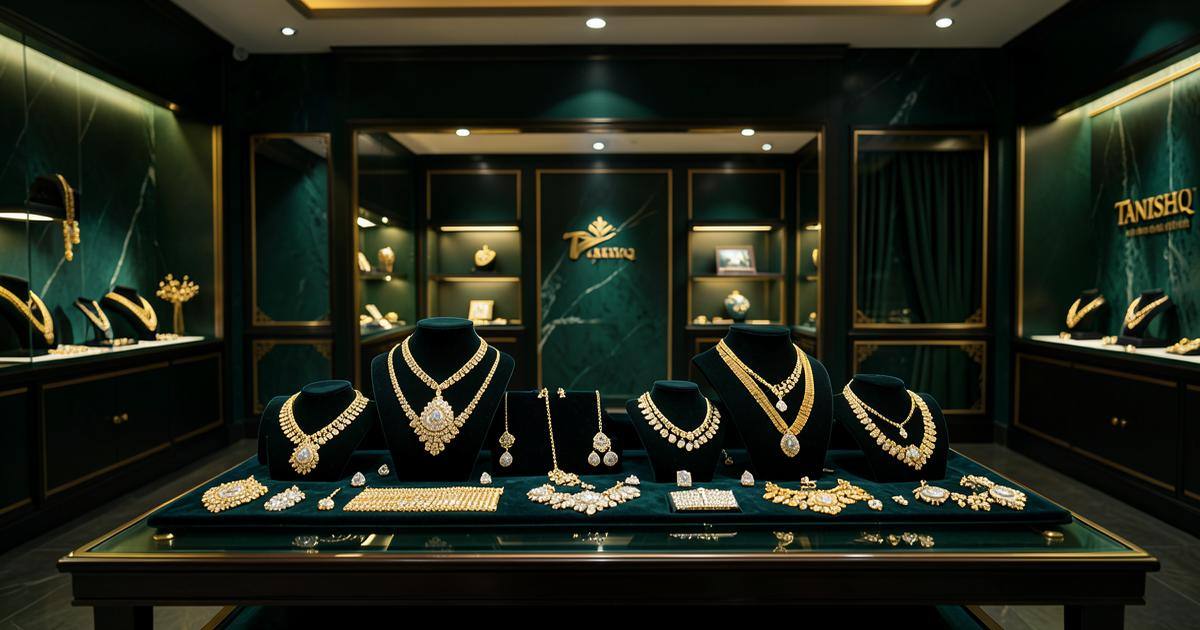
Today, Tanishq is one of the most recognizable jewellery brands in India, and jewellery has become by far Titan Company's largest business. In FY2025-26, Titan's jewellery business reported ₹18,195 crore of income in the fourth quarter alone, accounting for the overwhelming majority of the company's quarterly business income.
But the interesting part isn't just how big the business has become.
It is how Titan built it.
Titan Was Not Always a Jewellery Company
Titan's story began with watches.
The company started operations in 1987 with quartz watches and gradually built a strong consumer brand around products that were still relatively new to many Indian consumers.
Jewellery came later.
In 1994, Titan launched Tanishq and opened its first boutique on Cathedral Road in Chennai. The jewellery was initially positioned around 18-karat gold and diamond jewellery.
On paper, entering jewellery might not have looked like an obvious extension of a watch business.
It was a completely different category.
A watch is usually a personal purchase. Jewellery can involve an entire family. A watch can be replaced after a few years. Jewellery can be passed down through generations.
And perhaps most importantly, jewellery had something Titan couldn't simply manufacture in a factory:
trust.
Why Jewellery Was Such a Difficult Market to Enter
The traditional Indian jewellery market had an advantage that large organized companies couldn't easily replicate.
Local jewellers knew their customers.
A family might have been buying from the same jeweller for decades. The jeweller knew the family, understood their preferences and was often part of important occasions such as weddings.
So why would someone switch to a new branded jewellery store?
Titan needed to offer a reason.
And this is where Tanishq's strategy becomes interesting.
Rather than competing only on jewellery designs, Titan tried to address one of the fundamental problems in the category: uncertainty.
Was the gold really as pure as claimed?
Was the customer getting what they were paying for?
Could the customer trust the measurement?
These questions may sound simple, but they matter enormously when the purchase involves a large amount of money.
Titan understood that if it could reduce this uncertainty, it could build something much more valuable than another jewellery store.
It could build a brand.
The Karatmeter and the Trust Problem
One of Tanishq's most interesting moves came in 1998.
The company introduced the Karatmeter, a non-destructive method of testing gold purity in its stores. Titan describes it as an industry-first innovation that gave customers a way to check the purity of their gold.
The technology itself was useful.
But the bigger business lesson was what it represented.
Imagine entering a jewellery store where the company effectively says:
Don't just take our word for it. Check the purity yourself.
That changes the relationship between the customer and the seller.
Instead of asking customers to trust the brand blindly, Tanishq gave them a reason to trust the process.
Titan itself says the Karatmeter helped Tanishq forge deeper bonds of trust with consumers.
This is an important distinction.
A strong brand is not necessarily built by advertising alone.
Sometimes, it is built by solving a problem that customers have always accepted as part of the buying process.
From Selling Jewellery to Building a Brand
Titan could have stopped there.
It didn't.
The company gradually built Tanishq around more than just gold and diamonds.
It focused on design, store experience, presentation and branding.
That matters because jewellery is an unusually emotional category.
People don't buy jewellery only because they need something to wear. They buy it for weddings, anniversaries, festivals, milestones, gifts and personal occasions.
The purchase often has a story attached to it.
Tanishq's opportunity was to become part of those stories.
This is where Titan's consumer-business experience became useful.
Instead of competing purely as a commodity seller, it could build a recognizable identity around jewellery.
And once customers begin associating a category with a particular brand, the economics of the business can change.
A customer isn't simply comparing one piece of gold with another.
They are comparing brands, designs, trust, experience and convenience.
That creates room for differentiation.
The Store Became Part of the Product
There is another reason physical stores matter so much in jewellery.
Online shopping can work extremely well for many categories.
But buying a ₹2,000 pair of headphones and buying ₹2 lakh worth of jewellery are very different experiences.
Customers may want to touch the product, see how it looks, compare designs and discuss the purchase with family members.
The store therefore becomes part of the product experience.
Titan has invested heavily in this physical retail presence while also building digital and omnichannel capabilities.
And the scale is now significant.
Titan says Tanishq had 518 stores on its franchise information page, while the jewellery division has expanded beyond Tanishq into several other brands.
That physical footprint does more than generate sales.
It increases visibility.
A store in a prominent location is effectively a large, permanent advertisement for the brand.
More stores can mean more customers. More customers can strengthen the brand. A stronger brand can support further expansion.
That creates a reinforcing loop.
Titan Didn't Stop With Tanishq
One of Titan's smartest moves was recognizing that there wasn't one single jewellery customer.
Different consumers want different things.
Some want traditional wedding jewellery.
Some want luxury pieces.
Some want lightweight jewellery for everyday use.
Some are comfortable buying online.
Titan built a portfolio around these differences.
Tanishq became the flagship jewellery brand.
Zoya was introduced in 2010 to target the luxury jewellery segment.
Mia followed in 2011, focusing on contemporary jewellery for modern consumers.
And in 2016, Titan acquired CaratLane, strengthening its presence in the digital and contemporary jewellery space.
This portfolio approach is strategically important.
Titan doesn't need one brand to appeal to everyone.
Instead, it can operate multiple brands with different positioning while sharing capabilities such as sourcing, design, technology, retail knowledge and organizational expertise.
That makes the overall jewellery business much broader than Tanishq alone.
CaratLane Added a Different Dimension
CaratLane was particularly interesting because it addressed a changing consumer behaviour.
Younger consumers were becoming increasingly comfortable discovering products online, comparing designs and shopping digitally.
Jewellery was no exception.
CaratLane was founded in 2008 and became part of Titan's jewellery ecosystem through a strategic investment in 2016. Titan describes it as an omnichannel brand combining online shopping with physical retail.
This matters because online and offline jewellery aren't necessarily competing models anymore.
They can complement each other.
A customer might discover a design online, visit a store to see it physically and eventually purchase it through whichever channel is more convenient.
That's the power of an omnichannel model.
The customer doesn't necessarily care which channel generated the sale.
They care about the experience.
The Numbers Show How Important Jewellery Has Become
The transformation is visible in Titan's financials.
In FY2024-25, Titan reported jewellery division revenue of ₹46,571 crore excluding bullion sales. The annual report also showed jewellery revenue growing 21% during the year.
The jewellery business has continued to expand.
In Q4 FY2025-26, Titan reported jewellery business income of ₹18,195 crore, up 50% year-on-year. The business reported EBIT of ₹1,820 crore, with a 10% EBIT margin.
Within India, Tanishq, Mia and Zoya together reported ₹16,047 crore of income in the quarter, while CaratLane contributed ₹1,066 crore.
| Titan Jewellery — Q4 FY2025-26 | |
|---|---|
| Jewellery business income | ₹18,195 crore |
| YoY growth | 50% |
| Jewellery EBIT | ₹1,820 crore |
| EBIT margin | 10.0% |
| Tanishq + Mia + Zoya income | ₹16,047 crore |
| CaratLane income | ₹1,066 crore |
Figures exclude bullion and digital-gold sales; Titan reports the jewellery business on this basis.
One quarter shouldn't be treated as proof of a permanent growth rate.
But it does show how significant jewellery has become to Titan.
So What Is Titan's Real Competitive Advantage?
This is where the Titan story becomes more interesting for investors.
It is easy to say:
"Titan has a strong brand."
But that's only part of the story.
Titan's competitive advantage is better understood as a combination of several things.
- Brand trust. Jewellery is a high-trust category. A company that has spent decades building credibility has an advantage over a new entrant.
- Retail distribution. A large store network makes the brand visible and accessible while also providing customers with a physical buying experience.
- Design capabilities. Jewellery isn't only about gold. Customers care about design, craftsmanship and whether a piece fits their taste and occasion. Titan says its jewellery design studio focuses on market and trend research, product development and changing consumer preferences.
- Multiple brands. Tanishq, Mia, Zoya and CaratLane allow Titan to address different segments rather than relying on a single brand.
- Scale. Scale allows a company to invest continuously in stores, technology, marketing, design and customer experience.
And these advantages reinforce each other.
More stores → greater visibility → more customers → stronger brand → greater scale → more investment.
That is much harder for a small competitor to replicate.
This is what makes Titan's moat interesting.
It isn't based on one secret technology.
It's built from many advantages that have accumulated over time.
But Titan Is Not a Risk-Free Business
A strong business does not automatically mean a risk-free investment.
Titan's jewellery business is heavily influenced by gold prices.
When gold prices rise sharply, the value of jewellery purchases can increase even if customers don't buy significantly more pieces.
Titan's FY2024-25 annual report specifically noted that sharp gold-price volatility affected consumer sentiment and demand during the year.
Competition is another factor.
India's organized jewellery market has become increasingly competitive, with established national chains, regional players and newer digital-first brands all fighting for customers.
There is also a valuation risk.
Investors sometimes pay a premium for businesses with strong brands, high growth and long runways.
That creates an important distinction:
A great company is not necessarily a great investment at every price.
For someone studying Titan as a stock, understanding the business is only the first step. Valuation still matters.
What Investors Can Learn From Titan
Titan's journey offers lessons that extend well beyond jewellery.
- Solve a real customer problem. Tanishq didn't simply sell jewellery. It addressed the trust and transparency problem surrounding the purchase.
- Distribution can become a moat. A large retail network isn't just a sales channel. Over time, it can become part of the brand itself.
- Branding works best when supported by the product. Advertising can create awareness. But if the actual customer experience doesn't match the promise, the brand eventually suffers.
- Adjacent markets can create new growth. Titan expanded from watches into jewellery and eventually into several other consumer categories. The important part was that these weren't random businesses. They were generally connected to lifestyle and consumer spending.
- Different customers don't need the same brand. Tanishq, Mia, Zoya and CaratLane serve different segments. That allows Titan to participate in multiple parts of the jewellery market without asking one brand to do everything.
- A moat can be built gradually. Titan's advantage didn't appear overnight. It was built through years of brand building, stores, customer relationships, design, technology and execution.
That's an important lesson for long-term investors.
The strongest competitive advantages are often difficult to point to on a single balance-sheet line.
Where Does Titan Go From Here?
The opportunity for branded jewellery in India remains significant.
As consumers become more comfortable with organized retailers, branded products and omnichannel shopping, companies with strong brands and distribution can potentially capture more of the market.
Titan is also looking beyond India.
In FY2025-26, the company completed the acquisition of a 67% stake in Damas Jewellery, a long-established jewellery brand in the GCC region. Titan said the transaction marked a new phase in its international growth ambitions.
But international expansion also brings new challenges.
Building a brand in India and building one across different countries are not the same thing.
Titan will need to prove that the capabilities that worked in India can translate effectively into new markets.
Final Takeaway
Titan's jewellery story isn't really about how a watch company started selling gold.
It's about something more interesting.
Titan entered a category where trust was already deeply embedded in personal relationships. Instead of trying to compete only with individual jewellers, it gradually built a system around the purchase: recognizable brands, standardized retail experiences, transparency, design, technology and a growing network of stores.
Tanishq was the starting point.
Mia, Zoya and CaratLane expanded the addressable market.
And over time, jewellery became the engine that drives a large part of Titan's business.
For investors, perhaps the biggest lesson is this:
A strong consumer business isn't built simply by selling a good product. It is built by making customers comfortable choosing that product again and again.
Titan's journey shows what can happen when that trust is turned into a scalable business model.
If you're new to investing, our beginner's guide to the stock market is a good place to start before analysing individual companies like Titan.
Read More on MarketInShort
- Eicher Motors & Royal Enfield: The Turnaround Story of Siddhartha Lal
- Cupid Ltd Story: How a Small-Cap Condom Maker Became a Multibagger
- Rakesh Jhunjhunwala: The Big Bull of India — Life, Portfolio & Lessons
- What is Nifty 50? NSE's Benchmark Index Explained
Sources
- Titan Company — Official Website & Heritage
- Titan Company — Investor Relations, Results & Annual Reports
- Titan Company Ltd — BSE India
- Titan Company Ltd — NSE India
Disclaimer
This article is intended for informational and educational purposes only. It is not investment advice or a recommendation to buy or sell Titan Company Limited or any other security. Investors should conduct their own research and consider their financial objectives and risk tolerance before making investment decisions.